Paver Driveway Maintenance: A Simple Southwest Florida Calendar
Good paver driveway maintenance in Southwest Florida takes a few minutes a month and a little more each season. Sweep often, rinse gently, keep the joints full of sand, and treat stains early. As a result, your pavers stay tight, level and clean for many years.
- Why Pavers Need a Little Care in Venice
- Monthly Paver Driveway Maintenance Checklist
- Seasonal Tasks: Spring, Summer, Fall and Winter
- Oil, Rust and Other Stains
- Joint Sand, Sealing and Pressure Washing
- After a Storm
- When to Call a Pro
- Why Venice Homeowners Choose Venice Pavers & Landscape
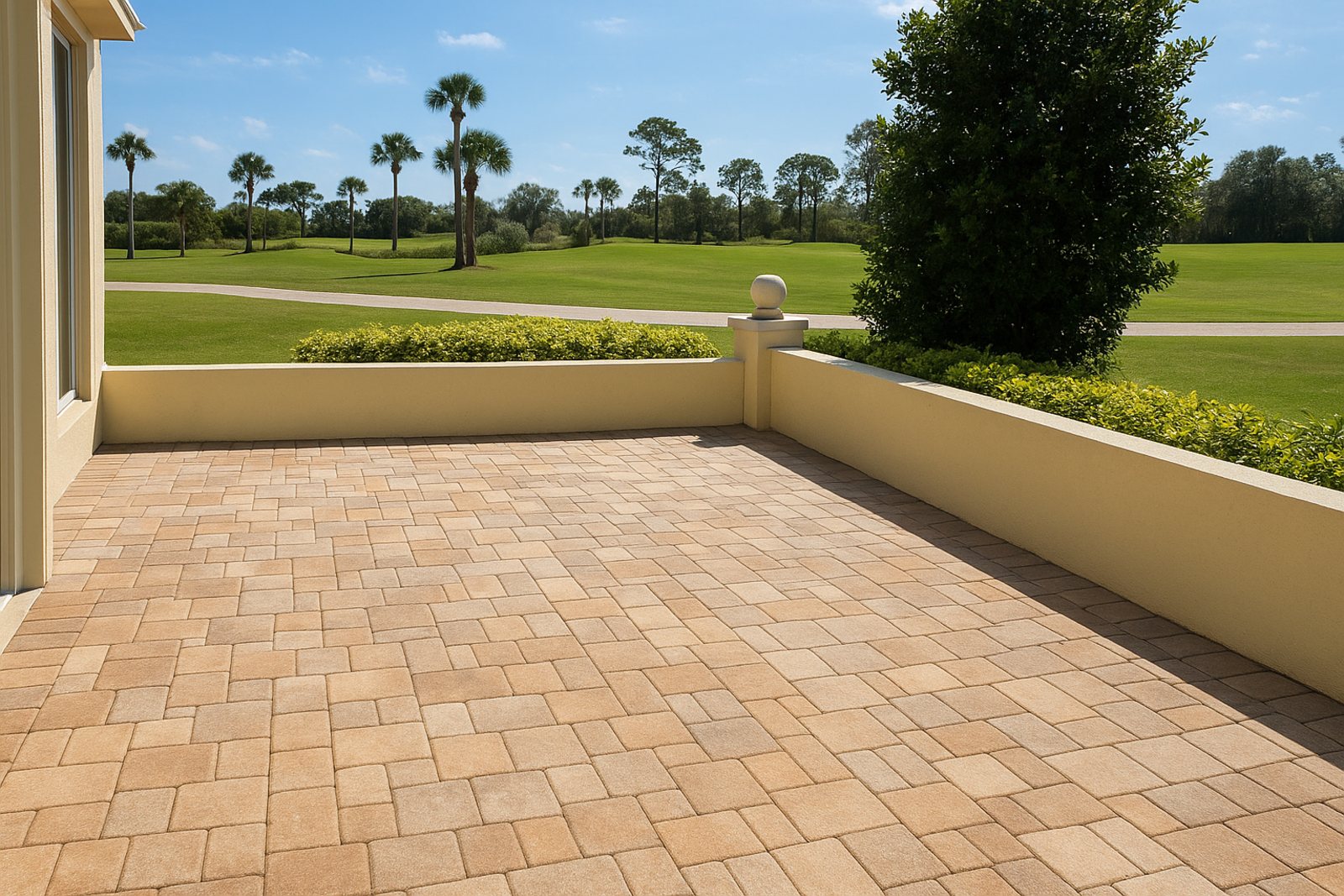
Why Pavers Need a Little Care in Venice
Pavers hold up well. Still, our climate tests them. Summer storms dump heavy rain in a short time. Sandy soil, strong sun and salt air near the coast also play a part. In addition, many yards run reclaimed or well water through sprinklers, and that water leaves orange rust stains.
The good news is that most care is simple, so you rarely need special tools. The key is the joint sand between the pavers, because it locks the units together. As a result, when joints stay full, the driveway stays tight. When sand washes out, pavers can shift, rock and let weeds in. So nearly every task below protects those joints.
Monthly Paver Driveway Maintenance Checklist
Set a reminder for the first weekend of each month. In fact, the whole routine usually takes less than half an hour.
- Sweep the surface. Use a stiff push broom to clear leaves, grit and palm debris. Sweep along the joints, not across them, so you do not pull sand out.
- Rinse gently. A garden hose with a spray nozzle is enough. Otherwise, you can blast sand straight out of the joints.
- Pull young weeds. Weeds come out easily when they are small, so pull them early. Also check the edges near the lawn.
- Watch for ants. Small mounds of fine sand mean ants are mining the joints. Then treat them with a product labeled for use on hardscapes.
- Look at the joints. Finally, if the sand sits well below the paver edges, plan a top-up.
Seasonal Tasks: Spring, Summer, Fall and Winter
Spring (dry season)
Spring is the best time for bigger jobs, because the surface stays dry for days. First, top up joint sand where it has dropped. Then fix any loose or sunken pavers before the rains arrive.
Summer (rainy season)
Heavy afternoon storms also test your joints and drainage. So after a big rain, walk the driveway and look for puddles, washed-out sand or sand on the street apron. Meanwhile, check sprinkler heads so they do not spray the pavers every morning.
Fall
Fall is a good time to deal with rust and oil stains from the summer. It is also a calm window for sealing, if you choose to seal.
Winter
Winter is mild here, so care stays light. Still, keep sweeping, because leaf litter holds moisture and invites mildew in shaded spots.
Oil, Rust and Other Stains
Stains are the most common complaint we hear. Treat them early, because fresh stains lift far more easily than old ones.
- Oil and fluid drips. Blot fresh spills with kitty litter or an absorbent. After that, use a cleaner made for oil on concrete pavers. Test it first in a hidden corner.
- Irrigation rust. Orange streaks usually come from iron in sprinkler water. A rust remover made for pavers works best. However, the stain will return unless you redirect the heads or treat the water.
- Mildew and algae. Shaded, damp areas can turn green or black. A paver cleaner and a stiff brush usually clear them.
- Tire marks. These often fade with time and sun, so wait a few weeks first. Otherwise, a degreaser and a brush help.
Avoid acid-based cleaners unless the label says they are safe for concrete pavers. Otherwise, strong acids can etch the surface and change the color.
Joint Sand, Sealing and Pressure Washing
For example, most driveways need a joint sand top-up every few years. Many installers use polymeric sand, which firms up after you mist it. For instance, it resists washout and makes it harder for weeds and ants to settle in.
Sealing, however, is a choice, not a must. A good sealer can deepen color, slow sun fading and make stains easier to clean. On the other hand, sealer wears off with traffic and needs reapplying, often every few years. Therefore, decide based on the look you want and the upkeep you will accept. Our paver driveway sealing page on venicepavers.com explains the options in more detail.
Pressure washing also helps before sealing or re-sanding. Still, use a wide fan tip and keep the wand moving. Too much pressure strips joint sand and can scar the paver face. In fact, a surface cleaner attachment gives a more even result.
After a Storm
Tropical storms and summer downpours can move a lot of water across a driveway. Then, once it is safe, take a quick walk around.
- Clear debris such as branches, palm fronds and sand.
- Look for low spots or pavers that sit higher or lower than their neighbors.
- Check the edges, especially along the lawn and the street apron, for any gaps.
- Rinse off salt spray if you live near the Gulf or a bay.
- Finally, refill any joints that lost sand.
One big advantage of pavers is that you can lift and reset single units. So small settling after a storm is usually a fixable repair rather than a full replacement.
When to Call a Pro
Most paver driveway maintenance is a homeowner job. However, some signs point to a problem below the surface. Call an installer if you notice:
- A dip or rut that keeps growing, often where tires turn.
- Pavers that rock, crack or spread apart at the edges.
- Water that pools against the garage or the house.
- Tree roots lifting a section.
- Widespread rust or old sealer that has turned cloudy.
In short, these issues usually trace back to the base, the edge restraint or drainage. Our driveway repair service in Venice covers resetting, re-sanding and edge fixes. If the old driveway is beyond saving, see how we approach new paver driveway installation. For more on how pavers are designed to perform, the Interlocking Concrete Pavement Institute (ICPI) publishes homeowner resources.
Why Venice Homeowners Choose Venice Pavers & Landscape
Maintenance is easier when the driveway was built right in the first place. That is where Venice Pavers & Landscape comes in: a locally owned company with a showroom at 509 Cypress Ave, Suite 1, in Venice, 25+ years of hardscape experience, and licensed, insured crews of our own. So when you call about care or repairs, you talk to the people who build driveways every day.
We are a manufacturer-certified Tremron installer, and we also install Belgard, Flagstone, TriCircle and Oldcastle pavers. First, we walk your property for free. Then we draw a custom layout and give you a free written, itemized estimate before any work starts. We serve Venice, South Venice, Nokomis, Osprey, Laurel, North Port, Wellen Park, Englewood and Sarasota. To get started, book a free walk-through or call 941-413-1109.
Frequently Asked Questions
How often should I seal my paver driveway?
Sealing is optional, so it depends on the look you want. If you choose to seal, many homeowners reapply every few years, depending on the product, sun exposure and traffic.
Can I pressure wash my pavers?
Yes, but use a wide fan tip or a surface cleaner and moderate pressure. Then refill the joints with sand, because washing usually removes some of it.
How do I stop ants in my paver joints?
First, keep the joints full, ideally with polymeric sand. Also treat active mounds early with a product labeled for use around hardscapes.
What causes orange stains on my driveway?
Orange streaks usually come from iron in sprinkler water, because many wells carry dissolved iron. A paver-safe rust remover lifts them, and adjusting the sprinkler heads keeps them from coming back.
Is paver driveway maintenance a lot of work?
No. In most homes it means a monthly sweep and rinse, prompt stain care, and a joint sand top-up every few years.
Related driveway guides
Get Straight Answers About Your Driveway
First, we measure and check drainage. Then we walk you through options, and the estimate is free and in writing.
Get a free estimate 941-413-1109