Paver Driveway vs Stamped Concrete: Which Lasts Better in Venice, FL?
Comparing a paver driveway vs stamped concrete comes down to cracking, repairs, heat and upkeep. Both can look sharp on day one. However, in Venice’s sandy soil, heavy summer rain and strong sun, interlocking pavers usually age better and are far easier to repair when something goes wrong.
- The Short Answer for Venice Homes
- Cracking and Ground Movement
- Repairs and Patch Matching
- Slipperiness, Sealing and Color Fading
- Heat, Sun and Salt Air
- When Stamped Concrete Still Makes Sense
- Paver Driveway vs Stamped Concrete: Long-Term Value
- Why Venice Homeowners Choose Venice Pavers & Landscape
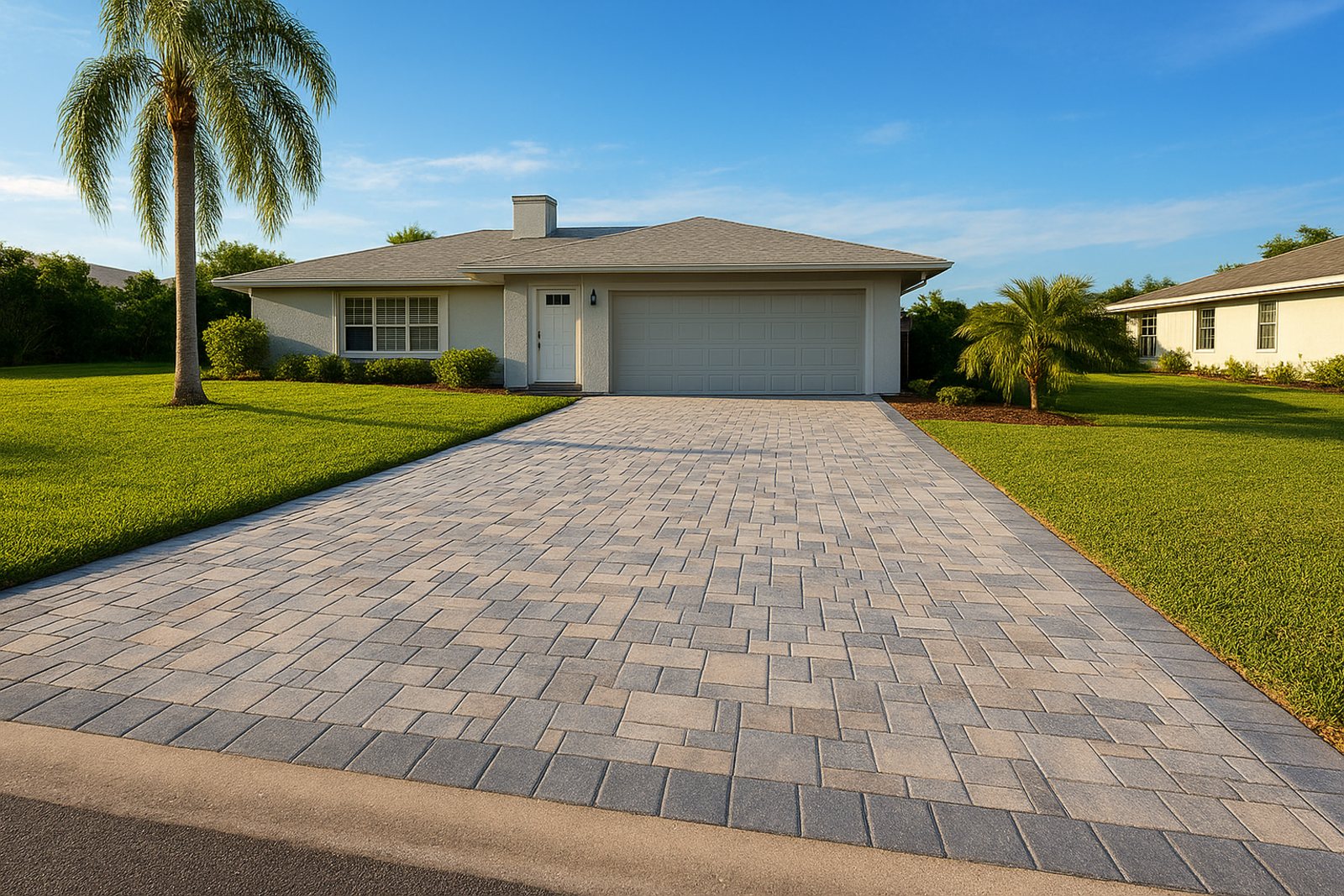
The Short Answer for Venice Homes
Stamped concrete starts as one continuous slab. The crew pours it, then presses a pattern and color into the top while it is still wet. A paver driveway, by contrast, uses hundreds of individual units that sit on a compacted base and lock together with joint sand. That single difference drives almost everything else in this comparison.
Stamped concrete can work on a stable lot with a skilled finisher. Still, we recommend pavers for most Venice homes because they flex with the ground, repair cleanly and hold their color longer. The sections below walk through each factor, so you can judge for yourself.
Cracking and Ground Movement
Concrete cracks. Finishers cut control joints to guide where cracks form, but those joints cannot stop cracking entirely. Southwest Florida soils are sandy and shift as they wet and dry. In addition, tree roots, heavy trucks and poor drainage add stress. As a result, many stamped slabs show hairline cracks over time, and the pattern often makes them stand out.
Pavers handle the same movement differently. Each unit can shift a fraction without breaking, so the joints act like thousands of small control joints. A well-compacted aggregate base and a solid edge restraint keep the whole field tight. The Interlocking Concrete Pavement Institute (ICPI) publishes the installation guidance that quality paver contractors follow for exactly this reason.
Repairs and Patch Matching
Repairs show the biggest gap between the two. When a stamped slab cracks or sinks, the usual fix is to saw out a section and pour a patch. However, matching the color, texture and stamp of an older slab is very hard. So most patches stay visible for the life of the driveway.
With pavers, the repair follows a simple sequence:
- First, the crew lifts the affected pavers by hand.
- Then they correct the problem underneath, such as a low spot, a root or a utility trench.
- After that, they reset the same pavers and refill the joints with sand.
- As a result, the area blends back in with no patch line.
The same feature helps when a plumber or utility crew needs to dig. Instead of a jackhammer and a mismatched patch, a paver crew can lift and reset your original pavers.
Slipperiness, Sealing and Color Fading
Stamped concrete depends on a sealer to protect its color and give it that rich look. Glossy sealers can turn slick when wet, which matters in a rainy climate and on sloped entries. Some finishers mix in a grit additive to help. Still, the coating wears and needs resealing on a regular schedule.
Color also behaves differently. Stamped concrete usually gets its color from a surface hardener or tinted release, so sun and tires can wear the top layer and reveal gray concrete beneath. Most quality pavers, on the other hand, carry pigment in the concrete mix itself. That way, light surface wear does not expose a different color.
Pavers still benefit from cleaning, and some owners choose a sealer for looks or joint stability. However, a paver driveway does not rely on a coating to stay intact. Irrigation rust stains can hit either surface, so aim sprinklers away from the drive.
Heat, Sun and Salt Air
Both surfaces get hot in a Florida summer, and darker colors run hotter than light ones. So if you want a cooler surface near a pool or lanai, choose lighter tones in either material. Meanwhile, strong UV can fade sealers and surface color on stamped concrete.
Heat also makes concrete expand and contract. A large slab must manage that movement through its joints, and stress can still find weak spots. A paver field, by contrast, spreads the movement across many small joints. Closer to the coast in Venice, Nokomis and Englewood, salt air can also wear on surface sealers. That adds one more upkeep task for stamped concrete.
When Stamped Concrete Still Makes Sense
To be fair, stamped concrete is not a bad product. For example, it can suit a homeowner who wants a seamless surface, has a very stable lot and accepts regular resealing. It also works well for small accent areas where cracking matters less.
If you go that route, hire an experienced finisher, ask where the control joints will go and request a slip-resistant sealer. In short, plan the upkeep from the start, because resealing is part of owning stamped concrete.
Paver Driveway vs Stamped Concrete: Long-Term Value
When you weigh a paver driveway vs stamped concrete, look past install day and think about the next couple of decades. Here is a quick checklist:
- Repairs: pavers lift and reset, while stamped patches rarely match.
- Upkeep: stamped concrete needs periodic resealing, while pavers mainly need cleaning and occasional joint sand.
- Appearance: cracks and worn sealer show on a slab, so pavers tend to keep a more even look.
- Curb appeal: many buyers see pavers as an upgrade, which also helps when you sell.
Up-front pricing depends on size, removal, base work and paver choice, so we do not quote ranges here. Instead, see our paver cost overview on venicepavers.com.
If you already have a tired stamped or plain concrete drive, replacement is often the cleanest path. Our concrete-to-paver driveway guide for Venice covers the tear-out and rebuild. The concrete-to-paver replacement page on venicepavers.com explains the full process. Then browse our Venice driveway design ideas to pick a pattern and color.
Why Venice Homeowners Choose Venice Pavers & Landscape
Venice Pavers & Landscape is locally owned, with a showroom at 509 Cypress Ave, Suite 1, in Venice. We bring 25+ years of hardscape experience. Licensed and insured, we also work with our own crews. As a manufacturer-certified Tremron installer, we install Tremron, Belgard, Flagstone, TriCircle and Oldcastle pavers.
First, we visit for a free on-site walk-through. Then we draw a custom layout and give you a free written itemized estimate before work starts. Once any old concrete is out, we finish most residential paver driveways in a single day. You can walk on it right away and drive on it in 24–48 hours. We serve Venice, South Venice, Nokomis, Osprey, Laurel, North Port, Wellen Park, Englewood and Sarasota. Book your free walk-through or call 941-413-1109.
Frequently Asked Questions
Is a paver driveway better than stamped concrete in Florida?
For most Venice homes, yes, because pavers flex with sandy soil and repair without visible patches. Stamped concrete can still work on a stable lot if you accept regular resealing.
Does stamped concrete crack?
Like all concrete, stamped concrete can crack as soil shifts and temperatures change. Control joints guide where cracks form, but they do not prevent them entirely.
Is stamped concrete slippery when wet?
Glossy sealers can make it slick in the rain. A grit additive in the sealer helps, but it wears over time and needs renewing when you reseal.
Can you put pavers over an old stamped concrete driveway?
Sometimes, but for driveways we usually recommend removing the slab first. That way, we can build a proper aggregate base and keep the finished height right at the garage.
How long until I can drive on a new paver driveway?
You can walk on it right away. After that, you can drive on it in 24–48 hours.
Related driveway guides
Get Straight Answers About Your Driveway
First, we measure and check drainage. Then we walk you through options, and the estimate is free and in writing.
Get a free estimate 941-413-1109