Replacing a Concrete Driveway With Pavers in Venice: A Comprehensive Comparison
Replacing a concrete driveway with pavers is one of the most common upgrades around Venice. The reason is simple: slabs crack when the sandy ground shifts, while pavers flex at the joints and can be reset. Here is a fair comparison before you decide.
- Understanding the Basics: Concrete vs Paver Driveway
- Aesthetic Impact: Curb Appeal and Customization
- Performance in the Venice Climate
- The Process of Replacing a Concrete Driveway with Pavers
- Maintenance and Repair Considerations
- Engineering Decisions: Base, Drainage, and Load Handling
- Cost Factors: Upfront Investment vs. Long-Term Value
- Environmental and Flood-Resilience Factors
- Resale and Neighborhood Impact
- Why Venice Homeowners Choose Venice Pavers & Landscape
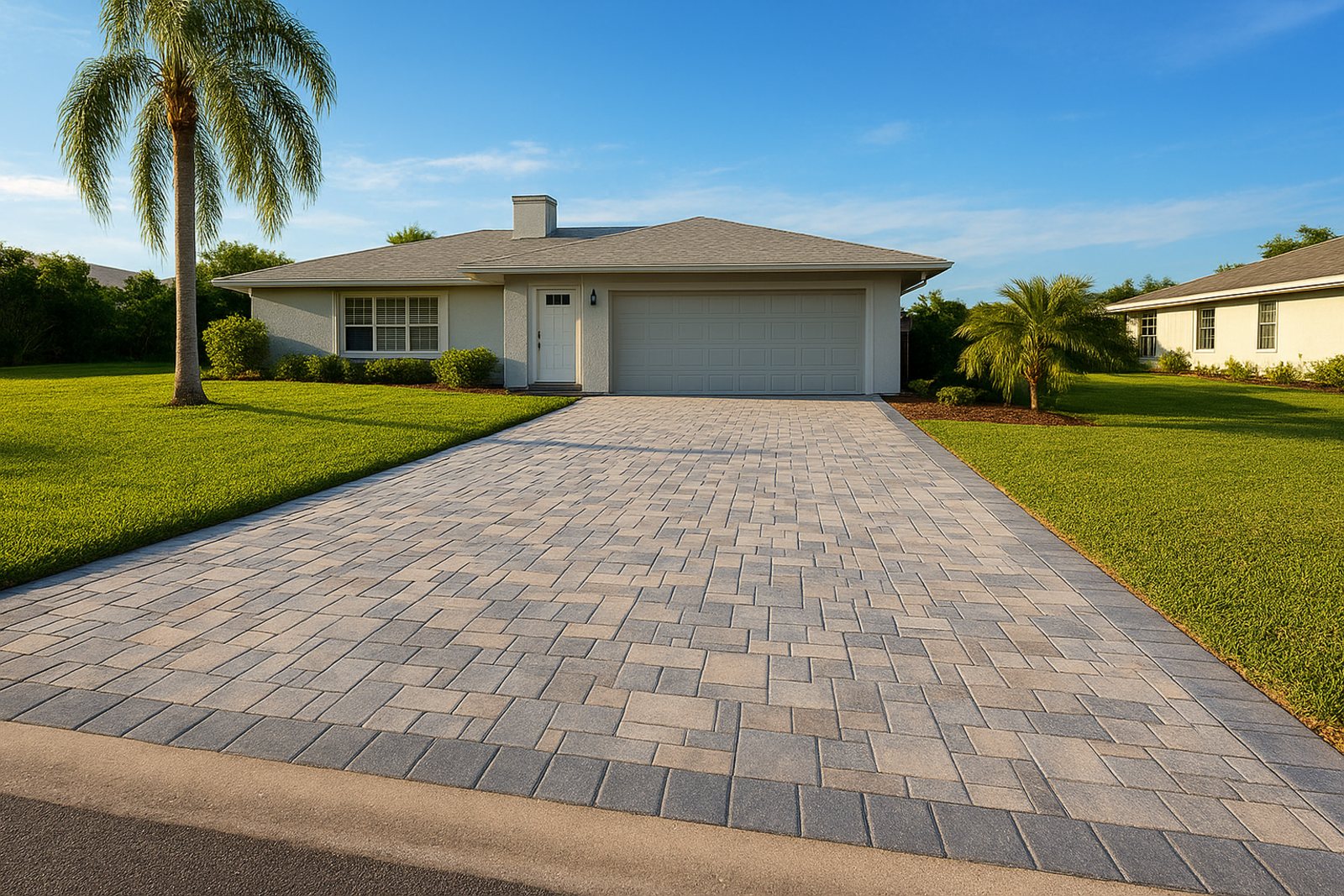
Understanding the Basics: Concrete vs Paver Driveway
The two main options for driveways in Southwest Florida are poured concrete slabs and interlocking paver systems. Both options have their appeals, but differ significantly in engineering, appearance, maintenance, and repairability. Venice Pavers & Landscape regularly works with both surfaces. It has also transformed many local properties, as showcased in their Paver Driveway Installer Venice page. Here, you can see before and after photos showing the striking difference replacement can make.
Aesthetic Impact: Curb Appeal and Customization
Concrete driveways offer a clean, uniform look, but choices are usually limited to basic finishes. Also, the color often fades under Venice’s intense sun. Over time, cracks and blemishes become prominent. In contrast, paver driveways can be highly customized. Choose from a wide array of colors, textures, and patterns — herringbone, basketweave, or running bond, for example. Pavers retain their vibrancy for years. As a result, they offer an eye-catching and welcoming approach to your home, which is especially desirable in communities along the Gulf Coast.
Performance in the Venice Climate
Venice’s hot, humid, and sometimes stormy climate is tough on hardscapes. Concrete, although durable, is prone to cracking due to shifting soils and thermal expansion. This can create long, visible fractures that collect rainwater and worsen over time. Paver driveways, installed on a well-compacted base, are designed with flexibility. The small joints between pavers allow for minor ground movement and temperature swings without cracking. In heavy rains, joint sand and underlying layers help distribute water, reducing standing puddles and erosion. That is a critical factor for many properties in Venice and North Port.
The Process of Replacing a Concrete Driveway with Pavers
Transforming an old concrete driveway into a vibrant paver surface is a multi-step process. After consulting with a local professional such as Venice Pavers & Landscape, your project typically involves:
- Assessment: Evaluating the current slab’s condition, slope, and drainage patterns.
- Removal: Breaking up the old concrete and hauling it away. In selective cases, the crew may instead prep the slab as a sub-base, if standards allow and drainage stays sound.
- Base Preparation: Compacting a new base layer of aggregate to support proper drainage and resist settling.
- Edge Restraints: Installing edging materials to frame and lock pavers in place.
- Paver Installation: Laying selected pavers in the desired pattern with precision spacing.
- Joint Sand: Sweeping polymeric sand into joints to stabilize the surface and inhibit weeds.
- Final Compaction & Sealing (project dependent): Compacting pavers and, if chosen, applying a surface sealer for added protection.
The result, as highlighted in Venice Pavers’ project gallery, is a driveway that looks distinguished. It is also built to withstand both vehicle loads and local weather extremes.
Maintenance and Repair Considerations
Homeowners in Venice often ask about long-term upkeep. Concrete requires periodic cleaning, and if cracks develop, repair options are limited and often visually obvious. Larger cracks or slab heaving can require extensive patching or full replacement. Conversely, paver driveways make maintenance straightforward. For example, if tree roots or dropped tools damage a few pavers, a crew can usually lift and replace just those units. The rest of the surface keeps its uniform look. After that, occasional sweeping, topping up joint sand, and (if desired) sealing every few years help preserve both appearance and function.
Engineering Decisions: Base, Drainage, and Load Handling
The success of any driveway project in Southwest Florida comes down to thoughtful engineering. For both concrete and paver driveways, a strong, well-drained base is essential. Local soils can include sand, clay, or organic material, and each presents unique challenges. Paver systems are often the better fit where you need a flexible surface. That is especially true in areas with frequent rainfall or shifting soils, as in many neighborhoods around Sarasota County. However, a site evaluation should set the specific design, including base thickness, grading, and the choice of joint sand or edge restraint. Seek a qualified professional familiar with regional conditions to make project-dependent recommendations.
Cost Factors: Upfront Investment vs. Long-Term Value
Comparing concrete vs paver driveway costs in Venice, FL involves more than the initial installation price. Conventional concrete may have a lower upfront ticket. Still, consider the likely need for repairs, aesthetic aging, and functional issues over time. Pavers generally require more labor and quality materials up front. In return, their durability and flexibility often mean fewer costly repairs and a longer-lasting, higher-value investment. For Gulf Coast homeowners who care about resale value and curb appeal, this trade-off often favors pavers. For a tailored quote, ask a local expert to visit your property and suggest options that fit your budget and goals.
Environmental and Flood-Resilience Factors
Parts of Venice and North Port are in flood-prone or environmentally sensitive zones. Permeable paver systems can help manage runoff and lower flooding risks. In fact, some homeowners choose them because they let water filter through instead of running off into storm drains. Standard concrete, by contrast, is impermeable and can increase surface flooding during summer storms. Meanwhile, select paver solutions with specific aggregate layers and wider joints can help meet local stormwater management objectives. Always consult your installer and, if applicable, local guidelines. Requirements vary significantly depending on lot location and conditions.
Resale and Neighborhood Impact
First impressions count. In many Venice neighborhoods, upgrades such as a paver driveway can positively influence property values and set your home apart. Paver upgrades can also align with the look of new developments and master-planned communities stretching from North Port to Osprey. Homes with updated driveways often photograph better and generate more buyer interest. Concrete, although serviceable, may lack that “wow” factor buyers are seeking. That gap shows most for homes aiming for premium status in the coastal market.
Why Venice Homeowners Choose Venice Pavers & Landscape
A concrete-to-paver swap is mostly removal and base work, so experience matters. Venice Pavers & Landscape is locally owned, licensed and insured, with 25+ years of hardscape experience and its own crews. Once the old concrete is out, we finish most residential driveways in a single day, and you can drive on them after 24 to 48 hours. To see your options, book a free walk-through or call 941-413-1109.
Frequently Asked Questions
What are the first steps when replacing a concrete driveway with pavers?
Begin with a site evaluation by an experienced local installer. They’ll assess your existing driveway, drainage patterns, and potential obstacles like tree roots. Then they will discuss aesthetic goals before providing a detailed scope and quote. Removal of the old concrete is usually necessary, as is proper preparation of a new base layer.
How do paver driveways perform under heavy vehicles?
When installed on a project-appropriate aggregate base and designed for expected loads, paver driveways can support standard cars, SUVs, and light trucks. Heavier loads may require thicker bases or reinforced edge restraints. In that case, your contractor should decide based on local site conditions.
Are there differences in permitting or local codes when switching from concrete to pavers?
Requirements vary between the City of Venice, Sarasota County and individual neighborhoods. So check with your local building office and your HOA before you start, and ask your contractor what they know about your street.
Does a paver driveway require sealing in the Venice area?
Sealing pavers is an optional but popular step for many local homeowners. That is because it enhances color retention and can reduce staining from leaves, oil, or iron-rich water. Some choose to reseal every few years based on exposure or personal preference. However, guidance varies by environment and product choice.
How long does a paver driveway replacement take?
Project timelines depend on driveway size, accessibility, and weather conditions. Once the old concrete is out, we finish most residential driveways in a single day. Still, a more accurate estimate requires a property visit, so make it part of your initial consultation.
Related driveway guides
Get Straight Answers About Your Driveway
First, we measure and check drainage. Then we walk you through options, and the estimate is free and in writing.
Get a free estimate 941-413-1109