Travertine Driveway Pavers vs Concrete Pavers: An Honest Comparison
Travertine driveway pavers give a natural stone look that stays cooler underfoot than many concrete pavers. However, they need thicker vehicular-grade stone, a solid base and regular sealing. Concrete pavers cost less to maintain and resist oil better, so the right choice depends on looks, budget and how you use the driveway.
- Travertine Driveway Pavers vs Concrete Pavers at a Glance
- Thickness: What Vehicles Need
- The Base Matters More Than the Stone
- Heat, Comfort and Look
- Staining and Sealing
- Maintenance Checklist for Each Material
- Honest Pros and Cons
- Why Venice Homeowners Choose Venice Pavers & Landscape
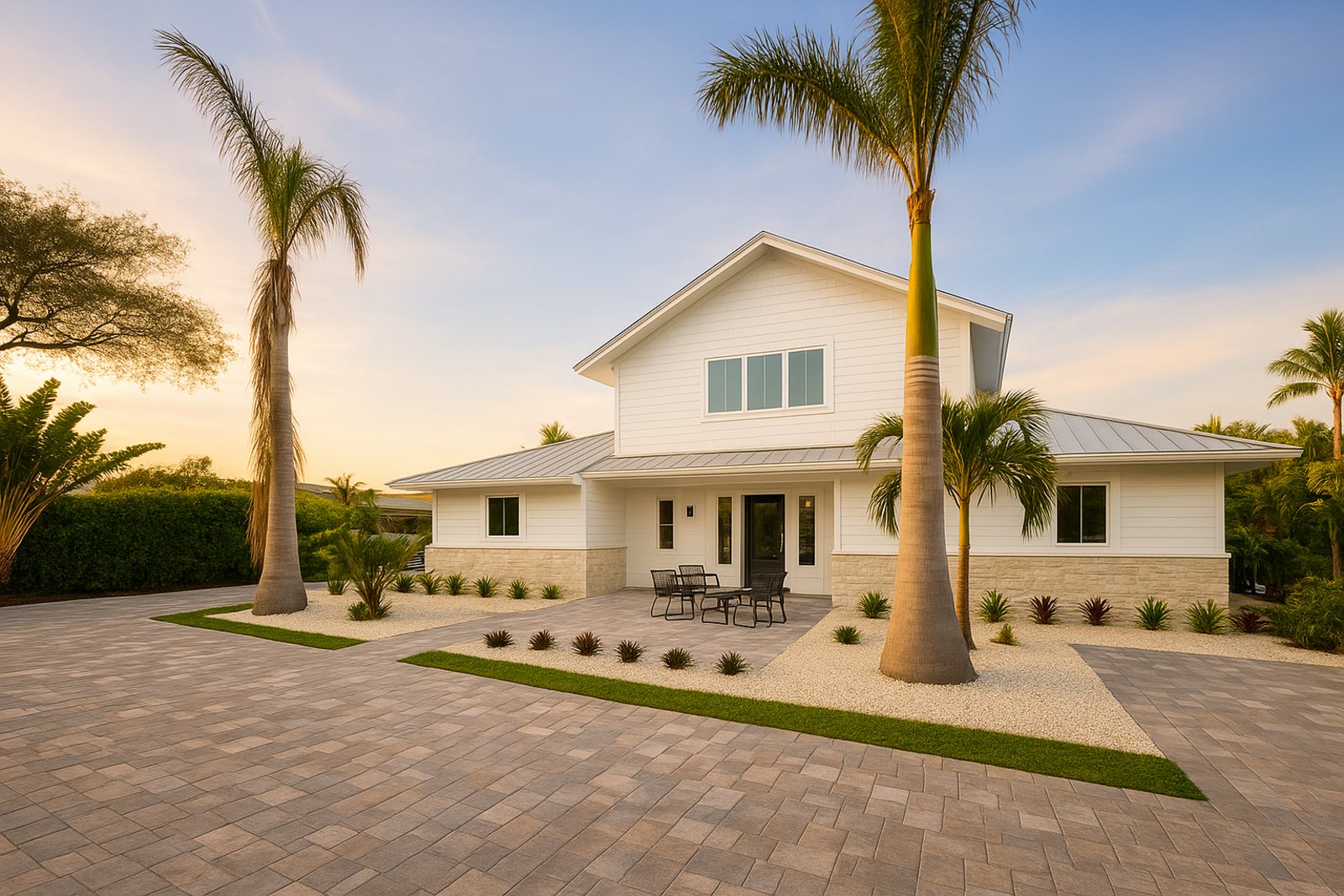
Travertine Driveway Pavers vs Concrete Pavers at a Glance
Both materials can make a strong, attractive driveway when the installer builds the base correctly. Still, they behave differently in daily use. This table sums up the main trade-offs:
| Factor | Travertine | Concrete pavers |
|---|---|---|
| Look | Natural stone, soft earth tones | Wide range of colors, shapes and textures |
| Heat underfoot | Stays cooler, especially light colors | Varies; darker colors get hot |
| Oil and rust stains | Porous, so stains soak in faster | More forgiving, easy to replace a paver |
| Sealing | Strongly recommended | Optional, helps color |
| Thickness for vehicles | Needs thicker vehicular stock | Commonly 60 mm or 80 mm |
Thickness: What Vehicles Need
Thickness is the first thing to check when you shop for travertine driveway pavers. Many travertine pavers sold for patios and pool decks are about 3 cm (1 1/4 inch) thick. That works well for foot traffic, because people weigh far less than cars. However, cars put far more stress on each piece, especially when tires turn in place.
For driveways, choose stone that the supplier rates for vehicular use, often around 6 cm (2 3/8 inch), and follow the manufacturer’s spec. Thin stone may crack at corners under a turning SUV. By comparison, vehicular concrete pavers commonly come in 60 mm for residential driveways and 80 mm for heavier loads. You can compare thicknesses and styles on our paver driveway options page.
The Base Matters More Than the Stone
Travertine and concrete pavers rely on the same foundation. First, the crew excavates and places crushed aggregate in lifts, compacting each one. Then they screed a bedding sand layer, typically about 1 inch. Finally, they lay the pavers, install edge restraint and sweep in joint sand.
Driveway bases commonly run 6 to 8 inches, or deeper on poor soils, and your contractor should specify the depth for your site. Southwest Florida sand drains fast, so compaction and edge restraint matter even more. The Interlocking Concrete Pavement Institute (ICPI) publishes guidance on segmental paver bases that applies to both materials.
Heat, Comfort and Look
Heat is where travertine shines. Light ivory and walnut tones reflect sun, so the surface stays more comfortable for bare feet. That matters if your driveway doubles as the path to the pool or the beach gear.
The look is also different, so think about your home’s style. Travertine has natural pits, veins and color shifts, so no two pieces match exactly. In contrast, concrete pavers give you more control, for example tumbled edges, blends and borders in many colors. If you want to see layouts side by side, browse our driveway design ideas.
Staining and Sealing
Travertine is a porous, calcium-based stone. As a result, oil drips, rust from irrigation water and acidic spills can mark it faster than concrete pavers. Acids such as citrus juice can also etch the surface.
So plan to seal travertine driveway pavers and to reseal on the schedule your sealer maker recommends. Sealing slows staining and makes cleanup easier. Also, clean oil spots quickly instead of letting them sit in the sun. Concrete pavers stain too, but you can usually lift and replace a stained paver with less effort and expense.
Maintenance Checklist for Each Material
Both surfaces need some routine care. Here is what to expect in a typical year:
Travertine
- First, rinse and sweep regularly so grit does not wear the surface.
- Reseal as the sealer maker recommends.
- Use a pH-neutral cleaner instead of acidic products.
- Fill natural pits that open up over time.
Concrete pavers
- First, rinse and sweep regularly.
- Top up joint sand after heavy rain.
- Aim sprinklers away to limit rust stains.
- Seal if you want richer color and less sun fading.
Honest Pros and Cons
In short, neither material wins every category. Travertine offers natural beauty and a cooler surface. However, it asks for more care and a thicker stone for vehicles. Concrete pavers offer more design options, easier stain control and wide availability in vehicular thicknesses.
Choose travertine if comfort and a natural stone look matter most and you are fine with sealing. Choose concrete pavers if you park work trucks, boats or trailers, or if you want lower upkeep. For pricing, our paver cost guide explains what drives each option. You can also see finished examples on our travertine paver driveways page on venicepavers.com.
Why Venice Homeowners Choose Venice Pavers & Landscape
Venice Pavers & Landscape is a locally owned company with a showroom at 509 Cypress Ave, Suite 1, in Venice. We bring 25+ years of hardscape experience, we are licensed and insured, and our own crews do every job. We are also a manufacturer-certified Tremron installer, and we install Tremron, Belgard, Flagstone, TriCircle and Oldcastle pavers. Every project starts with a free on-site walk-through, a custom layout and a free written, itemized estimate. We serve Venice, South Venice, Nokomis, Osprey, Laurel, North Port, Wellen Park, Englewood and Sarasota. So if you are weighing stone against concrete, book a free walk-through or call 941-413-1109.
Frequently Asked Questions
Can travertine handle a driveway?
Yes, when you use stone the supplier rates for vehicles and install it on a properly compacted base. Thin patio-grade travertine is not a good fit for cars.
Do travertine driveway pavers need sealing?
We strongly recommend sealing. Travertine is porous, so a sealer slows oil and rust stains and makes cleanup easier.
Is travertine cooler than concrete pavers?
Light travertine generally stays cooler underfoot than darker concrete pavers. That helps in Southwest Florida summers.
Which is easier to maintain?
Concrete pavers usually need less care. Travertine needs regular sealing and pH-neutral cleaners, because acids can etch it.
Can I mix travertine and concrete pavers?
Many homeowners do, for example a travertine field with a concrete paver border. Just make sure both materials suit vehicle traffic and match in thickness.
Related driveway guides
Get Straight Answers About Your Driveway
First, we measure and check drainage. Then we walk you through options, and the estimate is free and in writing.
Get a free estimate 941-413-1109