Paver Driveway Preparation and Drainage in Venice, Florida
Paver driveway preparation decides whether a driveway stays flat for decades or starts sinking after a few rainy seasons. In Venice, sandy soil and heavy summer storms make excavation, base, compaction and drainage the parts worth paying attention to.
- Why Proper Driveway Preparation Matters
- Key Steps in Paver Driveway Preparation
- Drainage Challenges in Venice, FL
- Designing Driveways for Optimal Drainage
- Material Considerations: Beyond the Surface
- Comparing Asphalt, Concrete, and Paver Driveways
- What to Expect from a Professional Installation
- Ongoing Maintenance for Florida Driveways
- Why Venice Homeowners Choose Venice Pavers & Landscape
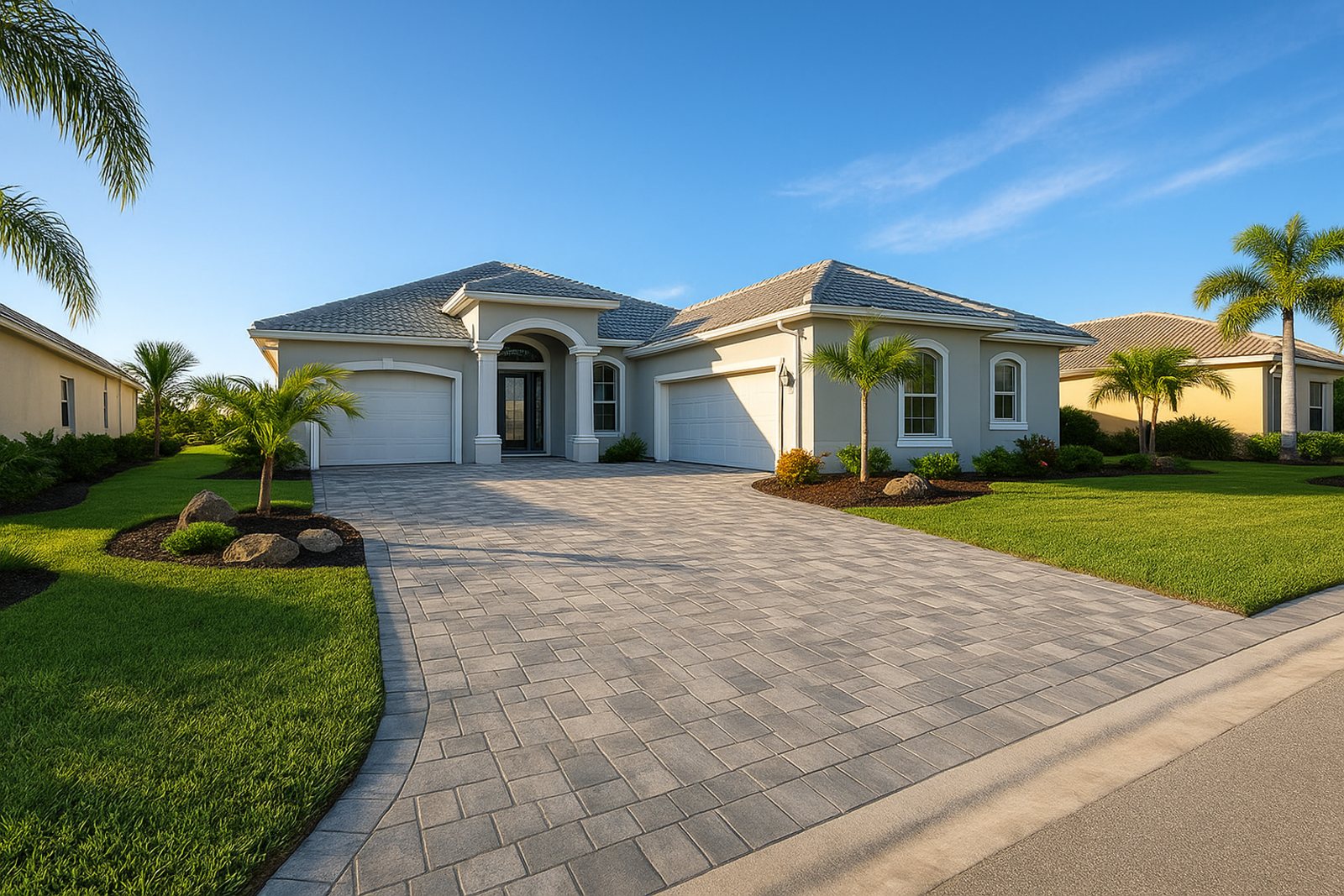
Why Proper Driveway Preparation Matters
Imagine arriving home every day to a driveway that radiates pride and quality. It withstands rain, sun, and the stresses of everyday life. However, the key to this level of reliability isn’t just the visible paver surface. Instead, it’s the meticulous groundwork. Proper paver driveway preparation in Venice, FL, keeps your driveway beautiful and functional for years, with minimal maintenance and fewer repairs.
Professional preparation reduces risks such as settling, shifting, drainage problems, and structural cracks. Because Florida’s sandy soils and subtropical climate present unique engineering challenges, skipping steps or cutting corners can quickly lead to uneven pavers or even erosion under your driveway. In short, the preparation work locks in stability and prevents water pooling. It also sets the groundwork for pavers to perform under Florida’s heavy rains and regular vehicle traffic.
Key Steps in Paver Driveway Preparation
A lasting paver driveway in Venice (or anywhere in Sarasota County) rests on a series of well-planned steps. Expert installers follow a proven process, then adjust it to site conditions:
- Site Evaluation: First, professionals assess the site, noting slopes, drainage paths, soil composition, and accessibility. This initial evaluation informs all follow-up design decisions.
- Excavation: Next, the crew carefully removes the existing driveway surface and underlying materials. Excavation depths vary, but are typically deeper in areas expecting heavier loads or poor soil quality.
- Subgrade Compaction: Compacting the subgrade is crucial for reducing future settlement. That way, the soil base stays firm and uniform, preventing future movement beneath the pavers.
- Base Material Installation: After that, the crew layers and compacts crushed stone or gravel to a precise thickness. The base acts as a solid, well-draining foundation for the driveway. In addition, installers tailor it to local conditions in Venice or North Port.
- Edge Restraint Placement: Sturdy edge restraints keep the pavers from migrating outward or shifting, so lines stay crisp over the years.
- Sand Bedding Layer: Finally, the crew spreads and levels a thin layer of bedding sand, providing a perfectly smooth platform for setting the pavers.
Each project’s requirements depend on the specific site, expected usage, local weather, and homeowner preferences. Also, quality materials, such as those recommended by Venice Pavers & Landscape, deliver both beauty and resilience.
Drainage Challenges in Venice, FL
Venice’s subtropical climate and flat terrain mean drainage should be top-of-mind for any hardscape project. Heavy downpours and periods of standing water can damage both the pavers and the foundation beneath if proper measures aren’t taken during the driveway preparation phase. Without adequate drainage, driveways can develop sunken spots, slippery surfaces, or even growing vegetation through the joints. In fact, this is particularly pressing in coastal areas like Venice Island and low-lying neighborhoods throughout Sarasota County.
Designing Driveways for Optimal Drainage
Expert paver driveway installers approach drainage as a combination of science and artistry. Every property is unique, so one-size-fits-all solutions seldom work. Here are key techniques that redirect water and ensure longevity:
- Grading and Slope: Installers carefully grade the finished surface to direct rainwater away from the home. As a result, water flows into designated drainage areas, reducing erosion and water intrusion.
- Permeable Pavers: In areas with frequent rain or tight site constraints, your installer may recommend permeable (or pervious) pavers. These specialized pavers let water seep between joints and down into a structured substrate. That supports natural filtration and reduces runoff.
- Drainage Trenches or Channels: In some situations, hidden drainage channels or French drains run beneath or alongside the driveway. They collect and relocate excess water.
- Catch Basins and Drains: For larger surfaces with significant rainfall capture, strategically placed catch basins and drain inlets can remove water from the paver field efficiently.
Collaborating with experienced professionals ensures that not only does your driveway handle Venice’s seasonal downpours, but it also meets your community’s practical needs and aesthetic standards.
Material Considerations: Beyond the Surface
Choosing the right base and bedding materials plays a vital role in paver driveway preparation. While most homeowners focus on the visible pavers, the longevity of your investment starts with what’s underneath. Here’s how professionals approach material selection:
- Base Aggregate: Installers choose a blend of angular crushed rock for both support and drainage. Then they adjust the depth and gradation to soil tests and vehicle loads.
- Bedding Sand: High-quality, clean sand provides a stable yet adjustable surface for setting pavers uniformly.
- Jointing Material: Crews sweep sand or specialty products into paver joints to lock them in place and inhibit weed growth.
- Drainage Fabrics: In some installations, a geo-fabric or filter cloth goes under the base layer to keep soil and aggregate from mixing. As a result, the driveway performs longer in areas with silty or unstable soils.
Property details, performance needs, and the homeowner’s aesthetic preferences all shape which materials go in and how.
Comparing Asphalt, Concrete, and Paver Driveways
When evaluating options for your new driveway in Venice, homeowners often compare paver driveways to asphalt or poured concrete. However, preparation steps and drainage approaches differ significantly:
- Concrete: Requires a stable, well-compacted subgrade. Concrete slabs are rigid, so improper preparation can lead to cracking.
- Asphalt: Relies on a compacted base and smooth grading for water runoff. Over time, it can soften and deform without careful preparation or may develop potholes with inadequate sub-base.
- Pavers: Offer flexibility and breathability. Individual units allow for shifting and settling without cracking, as long as the foundation and drainage are sound. That makes them well-suited to Florida’s dynamic soils and rainy weather.
Paver driveways also offer a broad range of design options, from classic patterns to contemporary styles, enhancing curb appeal as well as everyday satisfaction.
What to Expect from a Professional Installation
Engaging professionals means you’ll benefit from thorough site assessment, recommendations based on Venice’s unique landscape, and finely tuned installation techniques. Every step, from excavation to the final sweep of joint sand, relies on expertise and quality materials. It also relies on a commitment to engineering best practices. For that reason, your installer sets project specifics, such as the ideal base thickness, the need for geo-fabrics, or choice of edge restraints, according to your property’s needs and your personal preferences.
While the finished look of your driveway is important, it’s the skills and planning behind the scenes that result in true durability and satisfaction. Professionals can also help you explore related outdoor living upgrades to create a cohesive look for your home’s exterior.
Ongoing Maintenance for Florida Driveways
Even with the best paver driveway preparation in Venice, FL, ongoing maintenance is a crucial part of protecting your investment. Regular visual inspections after storms, periodic sweeping to prevent sand loss, and occasional re-sealing (when appropriate for your chosen paver type) will keep your driveway functioning and looking its best. Also, promptly addressing any minor issues helps prevent small problems from becoming significant repairs. Of course, your local installer is your best resource for personalized tips and maintenance routines tailored to Florida’s climate.
Why Venice Homeowners Choose Venice Pavers & Landscape
Good preparation is the part of the job you never see, so choose a team that shows you the plan in writing. Venice Pavers & Landscape gives you an itemized estimate covering excavation, base, slope, edging and joint sand before any work starts. We are locally owned, licensed and insured, with 25+ years of hardscape experience. Book a free walk-through or call 941-413-1109, and we will check your grades and drainage on site.
Frequently Asked Questions
What is the ideal base depth for a paver driveway in Venice, FL?
The best base depth depends on soil stability, anticipated vehicle loads, and site-specific drainage needs. Installers typically excavate and compact a base layer several inches thick, but in sandy or unstable soils, installers may recommend a deeper base. So a professional’s site assessment should set the optimal depth for lasting performance.
How do I know if my property needs special drainage solutions?
Signs such as chronic puddling, slow-draining soil, or a location near wetlands suggest custom drainage features may be necessary. In that case, a thorough site evaluation by experienced professionals will reveal any issues. It will also guide the choice of grading, permeable pavers, or hidden drains for your property’s conditions.
Can paver driveways be installed over existing concrete or asphalt?
Paver driveways require a stable, free-draining foundation. In some cases, existing concrete or asphalt may be used as a base if it is in excellent condition and properly prepared; however, most professional installers recommend full excavation and reconstruction of the sub-base for best results and greatest longevity in Florida’s climate.
Will weeds grow between my pavers if the preparation is done correctly?
Proper installation—with quality bedding sand, jointing material, and careful sealing—greatly reduces the risk of weeds. Some minimal growth may occasionally occur, but it is much less likely when a professional handles the preparation. Still, regular maintenance further limits any weed intrusion.
How long does it take for a new paver driveway to be ready for vehicle use?
Timing depends on the project’s complexity and weather conditions. Most driveways are ready for light vehicle use soon after installation, but your professional installer will advise on any specific curing or settling time needed for your chosen materials and construction method.
Related driveway guides
Get Straight Answers About Your Driveway
First, we measure and check drainage. Then we walk you through options, and the estimate is free and in writing.
Get a free estimate 941-413-1109