Pavers Over a Concrete Driveway: When an Overlay Works and When to Tear Out
Yes, you can sometimes lay thin pavers over concrete driveway slabs, but only when the concrete is sound, drains well and leaves room at the garage. For most Venice driveways, however, removing the old slab and building a proper base is the safer, longer-lasting choice.
- What an Overlay Actually Is
- When Pavers Over Concrete Can Work
- Height at Garage and Door Thresholds
- Drainage on a Sealed Slab
- Cracked or Settling Slabs Telegraph Through
- Pavers Over Concrete Driveway Loads: Why Tear-Out Usually Wins
- A Quick Decision Checklist
- Why Venice Homeowners Choose Venice Pavers & Landscape
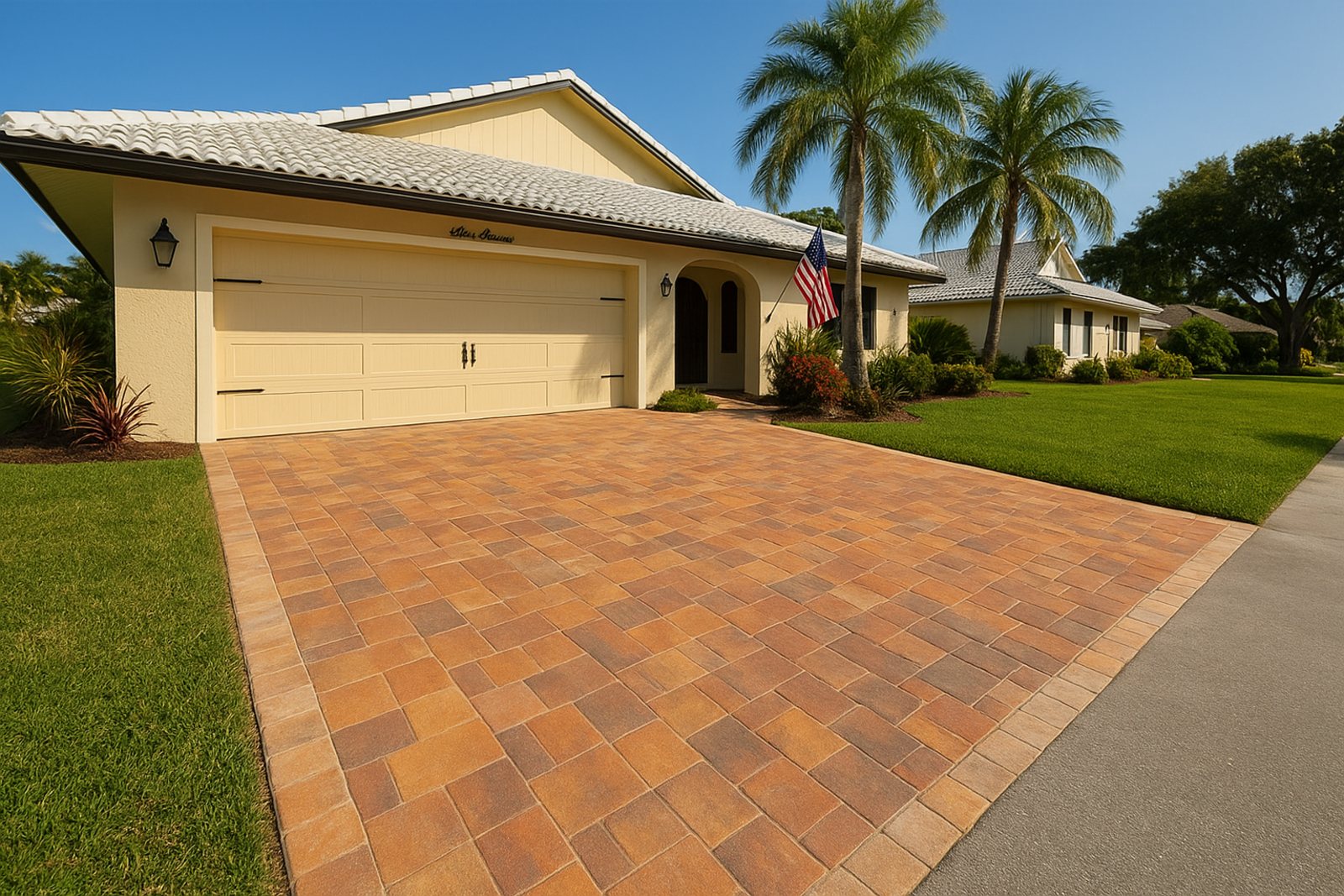
What an Overlay Actually Is
An overlay leaves the existing slab in place and uses it as the base. The crew cleans the concrete, then sets thin pavers on top. Overlay pavers are often about 30 mm (1 1/4 inches) thick, compared with roughly 60 mm for standard driveway pavers. Depending on the method, they sit on a thin sand bed or bond directly to the slab with mortar or adhesive.
The appeal is clear, because an overlay means less demolition, hauling and disruption. Still, the old concrete now does the job a compacted aggregate base would normally do. So the whole result depends on what lies underneath.
When Pavers Over Concrete Can Work
An overlay can make sense when the existing slab passes every one of these checks:
- The concrete is solid, so it shows no heaving, sinking or wide cracks.
- Water already drains off the slab and away from the house.
- Also, there is enough clearance at the garage, front door and any thresholds for the added height.
- The edges allow a sturdy edge restraint, so the pavers cannot creep.
- The area sees light loads, for example a walk or patio rather than daily car traffic.
In fact, that last point matters most. Overlays often work well on porches, entries and lanais. Driveways, however, carry the weight of turning tires every day, so the bar is much higher.
Height at Garage and Door Thresholds
Even a thin overlay raises the surface. At the garage, that extra height can create a lip at the door seal. As a result, the door may not close cleanly. It can also push the driveway level close to or above the garage floor, which invites water inside during heavy rain.
The same problem shows up at front entries, sidewalks and the street apron. In addition, a raised edge along the lawn can become a trip hazard. A full tear-out avoids all of this, because the crew can set the finished height exactly where it needs to be.
Drainage on a Sealed Slab
Water that slips through paver joints needs somewhere to go. On a properly built base, it soaks into the aggregate and the sandy soil below. On an overlay, however, the old slab blocks it. Unless the installer adds drain holes or the slab already slopes well, water can sit in the bedding sand.
Trapped water washes out sand, so pavers start to rock and shift. It can also feed efflorescence and algae. With Venice summer storms, that risk is real, so drainage deserves a close look before anyone suggests an overlay.
Cracked or Settling Slabs Telegraph Through
A slab with active cracks will keep moving. When that happens, the pavers on top follow the movement, and the cracks show up as dips, ridges or loose units. Installers call this telegraphing.
Settling, however, is even harder to hide. If part of the slab has sunk, the overlay simply copies that low spot. In fact, you end up with a brand-new surface that sits on the same old problem. If you see wide, growing or uneven cracks, our driveway repair guide for Venice can help you judge what is going on.
Pavers Over Concrete Driveway Loads: Why Tear-Out Usually Wins
Of course, cars and trucks put far more stress on a surface than foot traffic. Turning tires twist and push pavers sideways. On a properly built driveway, the crew counters this with several layers. First comes a deep compacted aggregate base placed in lifts. Then comes about an inch of bedding sand, plus a solid edge restraint and an interlocking pattern such as herringbone. The Interlocking Concrete Pavement Institute (ICPI) describes this approach in its installation guidance.
An overlay of pavers over concrete driveway slabs skips most of that system. Thin pavers on a thin bed also have less weight and depth to resist movement. As a result, we recommend a full tear-out for most residential driveways. Driveway base depth typically runs 6–8 inches or more on poor soils, and your contractor should specify it for your site.
A Quick Decision Checklist
Before you decide, walk your driveway with these questions:
- First, is the slab flat and free of wide or shifting cracks?
- Then, does water drain off it quickly after a storm?
- Also, is there room for added height at the garage and doors?
- Finally, will the area carry cars every day?
If any answer points the wrong way, plan on removal. For a step-by-step look at that path, read our concrete-to-paver driveway guide for Venice. You can also see the concrete-to-paver replacement process on venicepavers.com. For pricing questions, our paver cost overview explains the factors.
Why Venice Homeowners Choose Venice Pavers & Landscape
Venice Pavers & Landscape is locally owned, and our showroom sits at 509 Cypress Ave, Suite 1, in Venice. We have 25+ years of hardscape experience. Licensed and insured, we use our own crews. We are a manufacturer-certified Tremron installer, and we also install Belgard, Flagstone, TriCircle and Oldcastle pavers.
First, we inspect your slab during a free on-site walk-through and tell you plainly whether an overlay makes sense. Then you get a custom layout and a free written itemized estimate before work starts. Once the old concrete is out, we finish most residential paver driveways in a single day. You can walk on it right away and drive on it in 24–48 hours. Book your free walk-through or call 941-413-1109.
Frequently Asked Questions
Can you put pavers over a concrete driveway?
Sometimes, if the slab is sound, drains well and leaves room at the garage. For most driveways, though, removing the slab and building a proper base is the safer choice.
How thick are overlay pavers?
Overlay pavers are often about 30 mm thick. Standard residential driveway pavers are commonly 60 mm, and heavier loads call for 80 mm.
Will an overlay raise my driveway height?
Yes, an overlay adds the thickness of the pavers plus any bedding layer. That extra height can cause problems at garage doors, entries and the street apron.
What happens if my concrete has cracks?
Active cracks keep moving, so they can show through the pavers as dips or loose units. In that case, tear-out is the better path.
Is a tear-out much slower than an overlay?
Removal adds a step, but it pays off in a sturdier result. Once the old concrete is out, we finish most residential paver driveways in a single day.
Related driveway guides
Get Straight Answers About Your Driveway
First, we measure and check drainage. Then we walk you through options, and the estimate is free and in writing.
Get a free estimate 941-413-1109