Paver Driveway vs Asphalt: A Fair Comparison for Venice, FL Homes
The paver driveway vs asphalt choice mostly comes down to heat, upkeep and looks. Asphalt is smooth and quick to lay. However, Florida sun softens and fades it, and it needs regular sealcoating. Pavers stay firm in the heat, repair cleanly and give a Venice home far more curb appeal.
- How Each Driveway Works
- Florida Heat: Softening and Fading
- Sealcoating and Routine Upkeep
- Drainage and Heavy Rain
- Curb Appeal and the HOA Look
- Paver Driveway vs Asphalt: Lifespan Factors
- Where Asphalt Still Makes Sense
- Why Venice Homeowners Choose Venice Pavers & Landscape
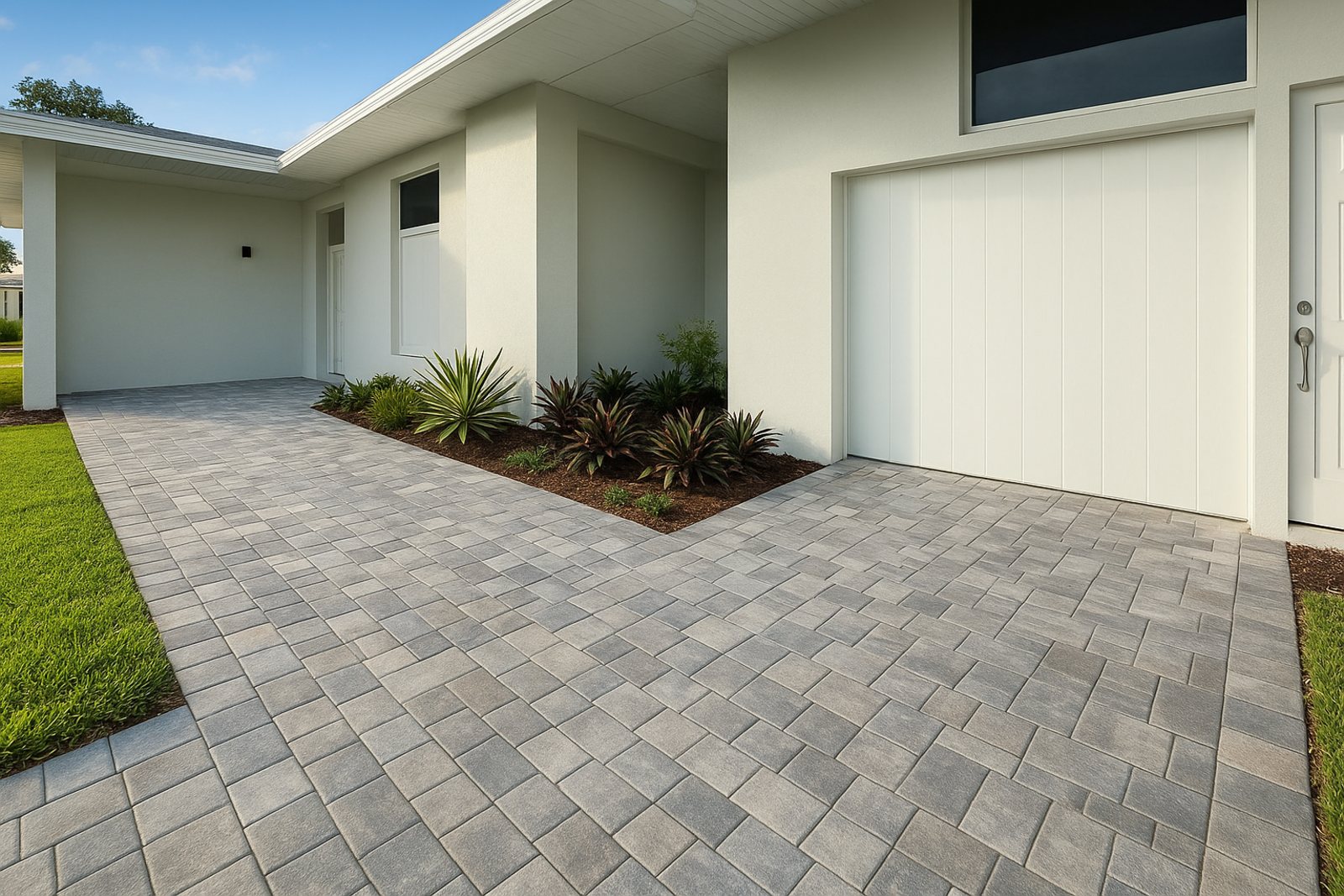
How Each Driveway Works
Asphalt is a mix of stone and sand held together by a petroleum-based binder. The crew spreads it hot over a compacted base, then rolls it smooth. Once it cools, it forms one flexible black surface.
A paver driveway, on the other hand, uses individual concrete units set on a bed of sand over a compacted aggregate base. An edge restraint holds the field in place, and joint sand locks the units together. Most residential driveways use vehicular pavers around 60 mm (2 3/8 inches) thick, while heavier loads call for 80 mm units. The Interlocking Concrete Pavement Institute (ICPI) publishes the installation guidance that quality paver contractors follow.
Florida Heat: Softening and Fading
Heat is the biggest issue for asphalt in Southwest Florida. Because the binder is petroleum-based, it softens on hot summer afternoons. As a result, tires, kickstands, trailer jacks and even parked cars can leave dents and scuffs. Turning a steering wheel while parked can also scar a soft surface.
Sun is the second issue. UV breaks down the binder over time, so fresh black asphalt fades to gray and the surface can turn brittle. Then small cracks open, rain gets in, and the edges start to crumble.
Concrete pavers do not soften in the heat. In addition, most quality pavers carry pigment in the mix itself, so they hold their color well. Lighter tones also stay cooler under bare feet than black asphalt.
Sealcoating and Routine Upkeep
Asphalt needs sealcoating to slow oxidation and fading. Many owners reseal every few years, and cracks need filling in between. Fresh sealcoat also has a strong smell and keeps cars off the drive while it cures.
Pavers need a different, lighter routine:
- First, sweep and rinse the drive when it looks dusty.
- Then treat oil or rust stains early, before the sun bakes them in.
- Also, top up joint sand when you see gaps.
- Finally, seal only if you want a richer color or firmer joints, because sealing is optional.
Irrigation rust stains can hit either surface. So it helps to aim sprinkler heads away from the drive.
Drainage and Heavy Rain
Summer storms in Venice drop a lot of water fast. Asphalt sheds water across its surface, so the grading has to be right. Low spots hold puddles, and standing water speeds up wear at the edges.
A paver driveway also relies on proper slope away from the house and garage. However, a paver crew can correct low spots later by lifting the units and fixing the base. Some homeowners also choose permeable pavers, which let water drain through wider joints into a stone base. Whether that suits your lot depends on your soil and grading, so ask your contractor to specify it.
Curb Appeal and the HOA Look
Asphalt gives a plain, uniform look. It suits some rural lots, but it rarely matches the style of newer Venice, Wellen Park or North Port neighborhoods. Many communities there already feature pavers on driveways, entries and walks.
Pavers, by contrast, come in many shapes, colors and patterns. For example, you can add a contrasting border, a herringbone field or a color that matches your roof. If you live in an HOA community, check its architectural rules before you choose. Every HOA sets its own standards, so get their approval in writing first.
To compare shapes and colors, see our paver driveway options for Venice. You can also explore the paver driveway page on venicepavers.com.
Paver Driveway vs Asphalt: Lifespan Factors
How long any driveway lasts depends on the base, drainage, traffic and care. Still, the two materials age in different ways. When you weigh a paver driveway vs asphalt, consider these factors:
- Base: both need a well-compacted aggregate base, and driveways need more depth than patios.
- Heat: asphalt softens and oxidizes, while pavers stay firm.
- Repairs: asphalt patches often show, while pavers lift and reset without a visible seam.
- Upkeep: asphalt needs regular sealcoating, while pavers mainly need cleaning and joint sand.
In fact, the ability to lift and reset units is the main reason pavers hold up so well over time. A root or settled spot becomes a small repair instead of a full resurfacing job.
Where Asphalt Still Makes Sense
To be fair, asphalt has real strengths. It goes down fast, and it handles very long rural drives where looks matter less. It also offers a smooth surface for rolling carts or skateboards.
Asphalt often costs less up front. However, pavers need less resealing and repair more cleanly over the years. Instead of guessing at numbers, read our paver cost overview on venicepavers.com. Then see how our driveway installation process in Venice works from layout to final compaction.
Why Venice Homeowners Choose Venice Pavers & Landscape
Venice Pavers & Landscape is a locally owned company with a showroom at 509 Cypress Ave, Suite 1, in Venice. We have 25+ years of hardscape experience. We are a licensed, insured company with our own crews, and we are a manufacturer-certified Tremron installer. We also install Belgard, Flagstone, TriCircle and Oldcastle pavers.
Every project starts with a free on-site walk-through. Then we create a custom layout and a free written itemized estimate before work starts. Once any old surface is out, we finish most residential paver driveways in a single day. So you can walk on it right away and drive on it in 24–48 hours. We serve Venice, South Venice, Nokomis, Osprey, Laurel, North Port, Wellen Park, Englewood and Sarasota. Book your free walk-through or call 941-413-1109.
Frequently Asked Questions
Does asphalt get soft in Florida heat?
Yes, asphalt can soften on hot afternoons because its binder is petroleum-based. As a result, tires, kickstands and trailer jacks can leave marks.
How often does an asphalt driveway need sealcoating?
Many owners reseal every few years, depending on sun, traffic and the product used. Your asphalt contractor should recommend a schedule.
Do pavers fade in the sun?
Pavers can lighten slightly over time. However, most quality pavers carry pigment in the mix, so they hold their color far better than black asphalt.
Can you install pavers over an existing asphalt driveway?
In most cases we remove the asphalt first. That way, we can build a proper compacted base and keep the finished height right at the garage.
Will my HOA allow a paver driveway?
Many Venice-area HOAs feature pavers, but every association sets its own rules. Check with your HOA and get approval before work starts.
Related driveway guides
Get Straight Answers About Your Driveway
First, we measure and check drainage. Then we walk you through options, and the estimate is free and in writing.
Get a free estimate 941-413-1109